
Tactical FPV line — technical specification
AEROSCOPE / Ventus Meridian developed T1–T3 fleet ($300–$1,000 per unit). Designed, built, flight-tested, and supplied under our integration cell.
T1 · People's FPV 10"
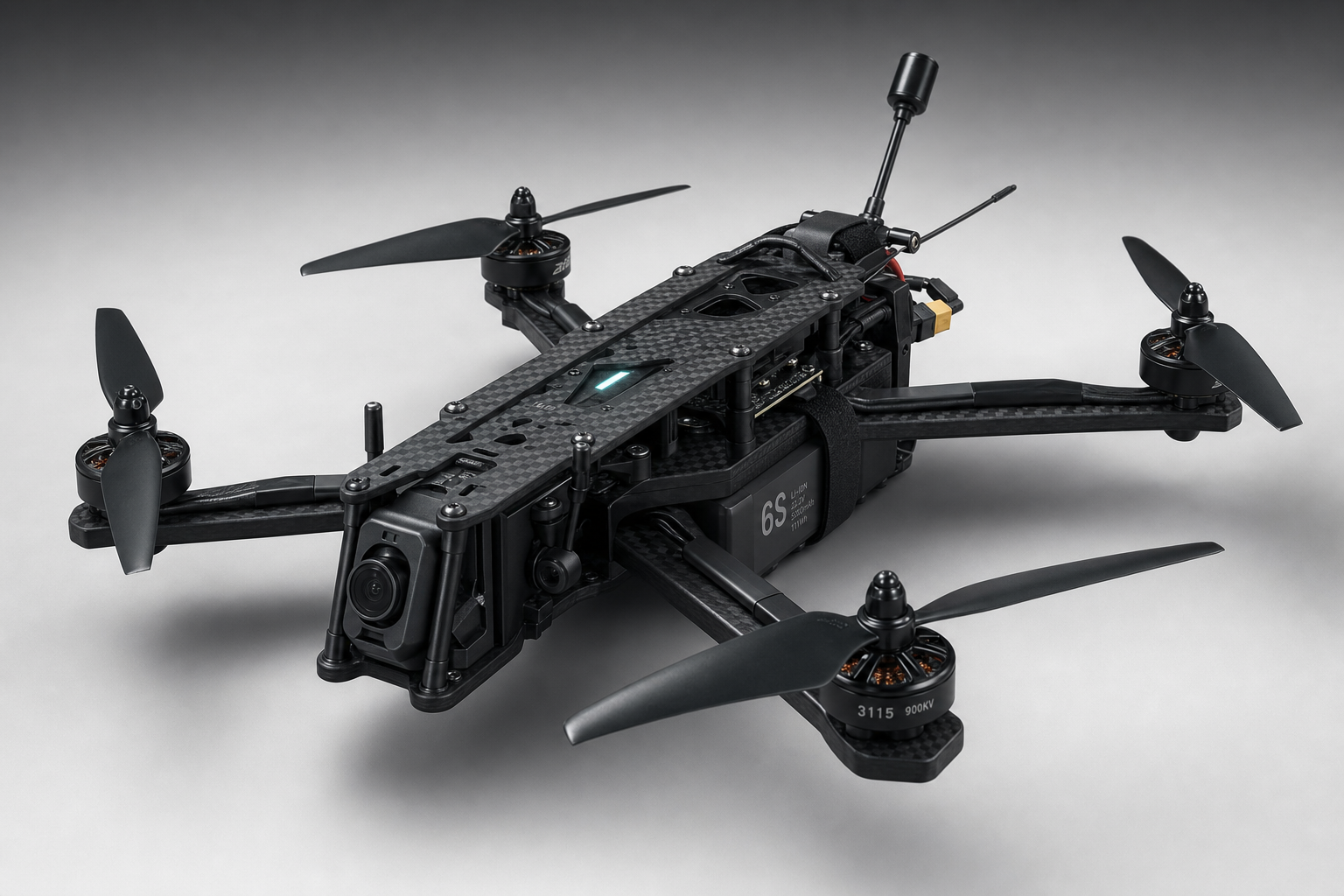
Workshop standard for one-way kamikaze missions at tactical range.
| Parameter | Typical value | Notes |
|---|---|---|
| Airframe | 10" carbon X / dead-cat | 3–4 mm arms, TPU mounts |
| Flight controller | Betaflight 4.5+ class | 4-in-1 ESC 45–55 A burst |
| Motors | 2207–2806 KV ~1700–1950 | 4×, 5" props |
| Video link | Analog 5.8 GHz VTX 800–1200 mW | 600 TVL–1200 TVL cam; IR cam +$40–80 |
| Command link | ELRS 915/868 or Crossfire | Hand controller + RX; 250–500 mW typical |
| Battery | 6S Li-ion 3000–5000 mAh | Largest BOM line; 6S3P packs common |
| Cruise / dash | 60–90 / 120+ km/h | Loaded with warhead |
| Assembly | 4–7 h per unit | After process standardisation in workshop |
Role: anti-vehicle, trench/supply point strike, loiter-and-dive under pilot FPV control.
T2 · Heavy FPV 13"
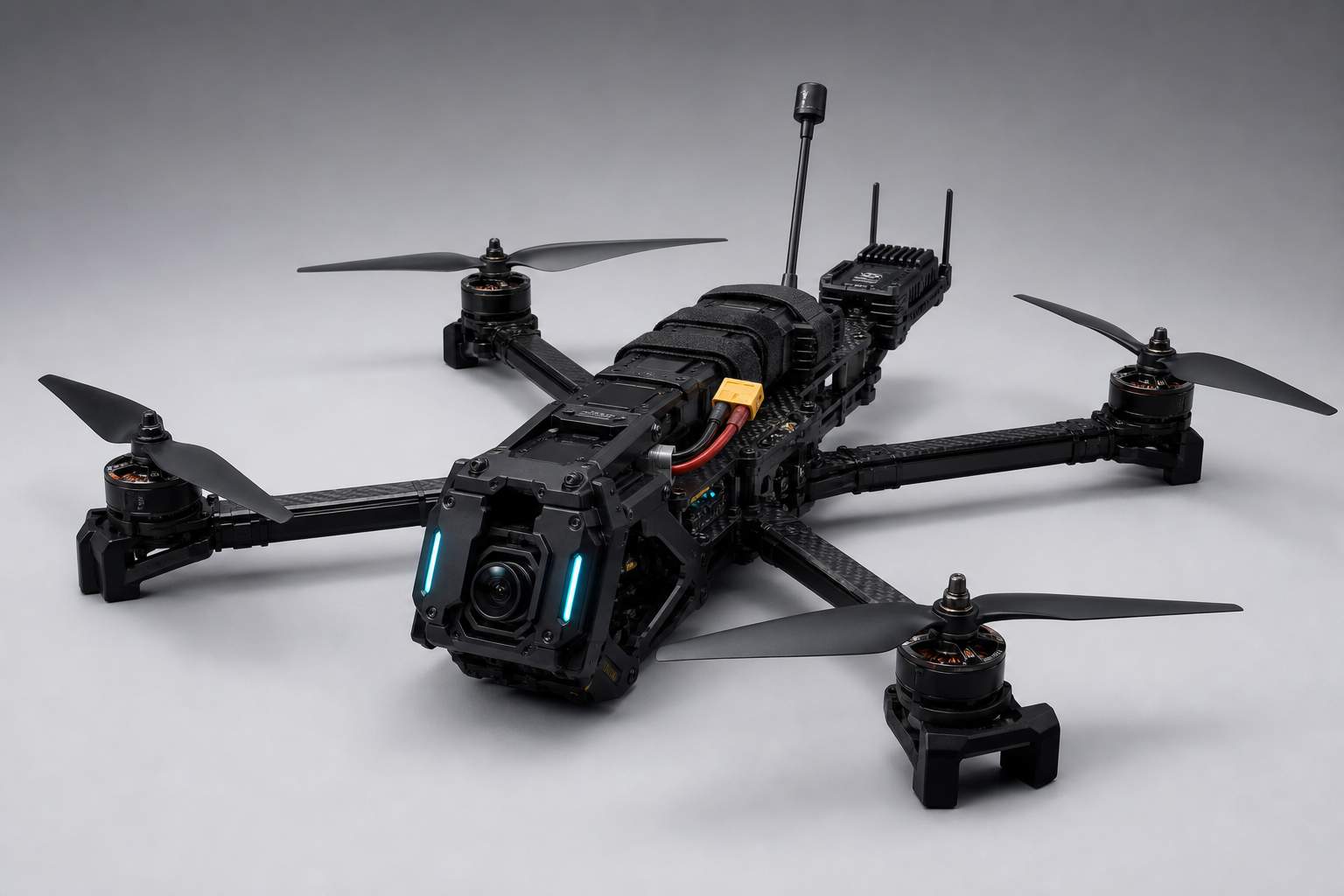
Recommended reference for heavier warhead and extended LOS in contested RF environment.
| Parameter | Typical value | Notes |
|---|---|---|
| Airframe | 13" reinforced quad | 7–8 mm arms, steel/bronze mounts |
| Flight controller | Betaflight / INAV | Separate ESC 55–80 A per arm |
| Motors | 2812–3115 class | 6–7" props, higher torque |
| Video link | Analog high-power or DJI O3 / HDZero | Digital adds cost and latency trade-off |
| Command link | ELRS 868/915 long-range | Directional RX option for extra km |
| Battery | 6S–8S high-capacity Li-ion | Heavier pack; verify CG with warhead |
| Anti-jam option | Fibre-optic spool (optional) | Often >$800 total; immune to RF jamming |
| Cruise / dash | 50–80 / 100+ km/h | Heavier load, lower agility than T1 |
Role: anti-armour, night strike with IR FPV cam, hardened RF link where budget allows.
T3 · Field workshop kit
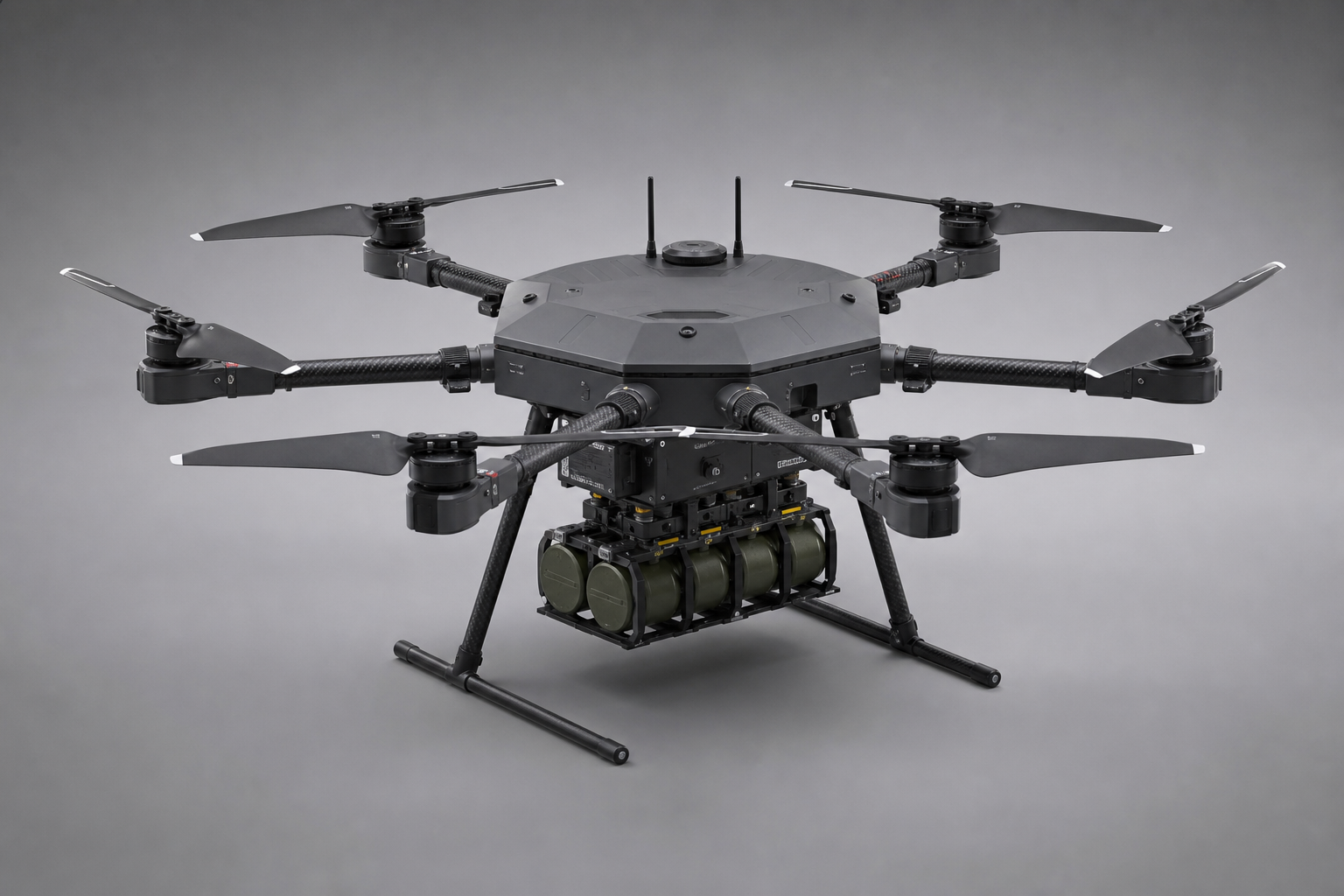
Hex/octo dropper or foam fixed-wing DIY — higher payload, longer reach, slower cycle time.
Variant A — ag-hex / octo bomber
- 6–8 motor frame, 15–18" props, Pixhawk or FC with GPS hold for drop run.
- Payload bay for mortar rounds, grenades, or supply pod; single or multi-drop.
- Requires skilled assembler; flight time 15–25 min typical.
Variant B — DIY fixed-wing (Pixhawk / ArduPilot)
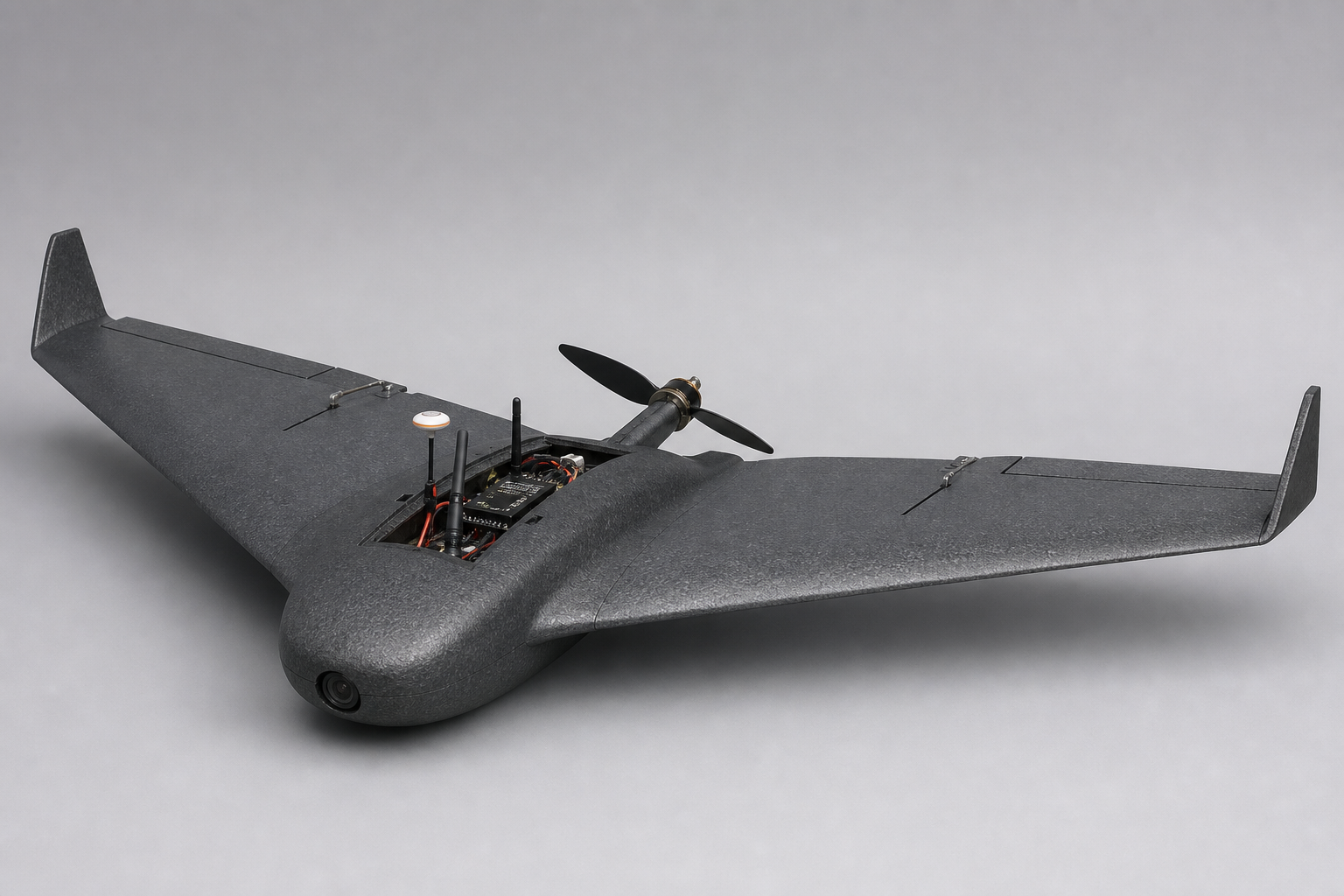
- EPO/EPO foam or composite pusher; 1.8–2.4 m span class.
- Autopilot waypoint + FPV nose cam; strike terminal phase manual or scripted dive.
- Better range/endurance; harder workshop QA; catapult or hand launch.
Bill of materials — T1 reference
| Component | Indicative USD | Notes |
|---|---|---|
| Carbon frame 10" | $25–40 | X or dead-cat geometry |
| FC + 4-in-1 ESC stack | $40–80 | Betaflight ecosystem |
| Motors 2207–2806 ×4 | $60–100 | Match KV to prop and cell count |
| Props + hardware | $15–25 | Spare props in field kit |
| VTX + FPV camera | $30–50 | IR sensor variant +$40+ |
| RX + hand controller | $50–120 | ELRS / Crossfire class |
| 6S Li-ion pack | $80–150 | Often largest cost line |
| Wiring, solder, 3D prints | $15–30 | Labour not included |
| Typical total | $300–400 | ±30% by supplier and batch |
Operational envelope
- Guidance: pilot-in-the-loop FPV goggles; no sovereign SATCOM; RF-jam sensitive unless fibre-optic spool (premium tier).
- Survivability: single-use; no spares contract; acceptance = hover test in workshop + one field validation.
- Weather: light rain/wind limits; T1 most sensitive; T2/T3 slightly more tolerant with heavier build.
- Legal / supply chain: COTS parts often export-controlled; Chinese FC/motor/VTX supply disruptions reported 2024–2025.
- Scale: serial batches from AEROSCOPE integration cell — uniform QA and traceability.
Workshop acceptance checklist (volunteer standard)
- Motor direction and ESC protocol verified on bench.
- VTX channel / power within local allocation; video clear at 100 m.
- Failsafe configured (drop / disarm on link loss per unit SOP).
- CG marked with nominal warhead mass simulator.
- Serial label + batch log for donor traceability.
Position vs AEROSCOPE catalogue
| Tier | Unit economics | Mission | Programme desk |
|---|---|---|---|
| T1–T3 tactical FPV | $300–1,000 | Tactical strike / short ISR | AEROSCOPE commercial desk |
| AS-350 / AS-400 / AS-H | $38k–165k / airframe | C-UAS intercept, AI terminal guidance | AEROSCOPE integration + SLA |
| P1–P3 ICE patrol | $135k–325k (3+1 fleet) | 250–500 km border / maritime ISR | Factory build, written acceptance, HQ panel |
T1–T3 FPV covers tactical strike at zero km. ICE patrol covers persistent wide-area ISR. AS-series covers governed intercept. Many agencies deploy two or three tiers from one desk.